
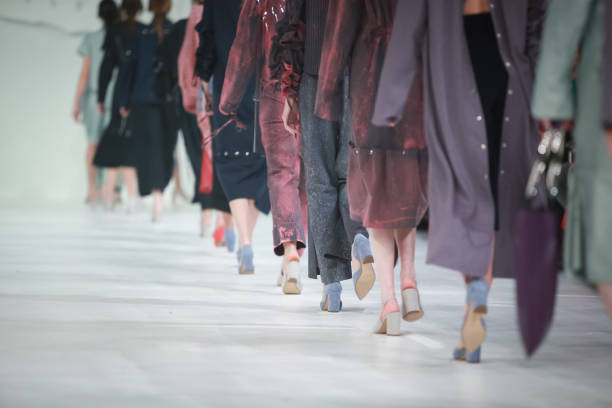

There has always been more to clothing than just practicality. It has always had its own language, a means of communicating without sound and of demonstrating without elaboration. Nothing about what we wear, how we mix and layer, the textures we look for, and the colors we want is arbitrary. Even in its most basic form, clothing conveys a message, an attitude, or a memory. Additionally, there is a subtle return to something more profound, even if the fashion business has historically placed a lot of emphasis on the surface—on spectacle, trend, and gloss. a move toward meaningfully embroidered apparel. In the direction of substance-rich style.
Rejecting beauty is not the point of this change. The goal is to enhance it. It involves considering a garment’s meaning in addition to its fit or flow, including who manufactured it, how it was made, why it exists, and the tales that are woven into its seams. Clothing turns become a form of emotional, cultural, and personal story. The jacket was taken from a grandmother’s wardrobe. The scarf was purchased at a bazaar almost halfway across the globe. The outfit was carefully fitted after a season of arrival or loss. These are more than simply garments. They are moment bearers.
Dressing with purpose means dressing for connection as much as for the event. should see clothing as symbols of experience rather than just an article of clothing. It is a means of paying respect to the hands that make up the cloth, the effort that goes into the stitching, and the inspiration behind the shape. It’s a method of interacting with fashion as dialogue as well as consumption—between the creator and the user, between the past and the present, and between the individual and society.
There is no pattern here. It’s a commemoration. a return to an era when garments were handed down, fixed, and repurposed rather of being thrown away. a period when clothing was manufactured with care, and that care was ingrained in its durability. That ethic is being translated into the present day. Through collections based on community, environment, and legacy, repurposed materials, and slow processes, designers are creating new sorts of narratives. They want to know what feels correct as well as what looks nice. And everything changes when you ask that question.
The definition of beauty changes when style has substance. Character takes the place of perfection. The pure loses its power to the lived-in. A noticeable repair provides more context than a perfect seam. This is the emergence of clothing that changes with us and reflects our evolving identities. Clothes is no longer about concealing imperfections or erasing the past. It becomes about hanging onto memories, exposing depth, and creating space for transformation.
This change is also personal for many. It’s about taking back who you are. Substance-driven design becomes a means of visibility for those whose cultures, bodies, or narratives have been marginalized by mainstream fashion. A unwillingness to be simplified or flattened. It is a means of expressing resistance, gender, history, lineage, and spirit. I’m not dressed for you, to put it simply. I’m dressed myself. And this is how it seems.
Since that style is based on reality rather than trend, it is hard to imitate. It develops from personal experience. It contains an item that is not mass-producible. Additionally, since it originates from a position of harmony, it resonates differently. It conveys a solid assurance that isn’t boisterous. It is difficult to ignore, yet it does not plead for attention.
The decision to slow down with fashion also has a subtly radical element. Choosing to care about materials, effect, and purpose is a disruption in an accelerating world. It challenges the notion that clothing is just data points for an algorithm, content for a feed, or something to purchase and then forget. It maintains that fashion may be both attractive and long-lasting, as well as ethical and expressive.
To dress with curiosity is to dress with substance. To inquire: What is the origin of this fabric? Which dyes were applied? Under what circumstances and by whom was this made? These are not intangible inquiries. They have a strong human connection. They focus on establishing a connection with the whole garment life cycle, from seed to thread to shelf. And they alter the connection with the clothing itself when those questions are posed. They create room for compassion.
That compassion spreads. It changes what we pass down, what we keep, and how we purchase. It gives craft—weaving, sewing, dying, and shaping—newfound attention. It makes room for local producers, smaller labels, and voices that have hitherto been marginalized. The most fascinating tales are often found in areas that were never intended for widespread notice when we go beyond the logo and into the process.
The clothes we wear also have a poetic quality to them. the ones that accompany us on our seasonal journeys. those that soften, fade, and stretch. Time is indicated by these parts. that bear the body’s impression. That collects memories the like skin collects sunlight. In a society that is fixated on the latest trends, these garments provide continuity. They serve as a reminder that fashion need not always be reinvented. It may deepen as well.
This does not imply a lack of inventiveness. Conversely, new forms of expression are often made possible by style with substance. We start to dress more individually when we stop consuming things quickly. We blend materials, civilizations, and periods. We reinvent, layer, embellish, and change. Clothes transforms from a product to a medium. It turns becomes a place for self-discovery, narrative, and experimenting.
Although it’s simple to consider style with substance to be a personal preference, its effects go beyond that. Our choices on what to dress and why have an impact on other people. They have an impact on narratives, landscapes, and economies. One of the sectors of the global economy that uses the most resources is fashion. A concern for clothes is a concern about the climate. To be concerned with style is to be concerned with work. Style has structural underpinnings in addition to being just personal.
Here, duty and fashion come together in a seamless manner rather than one that is overbearing or moralistic. When we dress thoughtfully, we serve as a reminder that dignity need not be sacrificed for beauty. that ethics and pleasure are not mutually exclusive. that clothing may convey depth and lightness.
In the future, the backstories of our clothing will be just as important as how we seem wearing it. when the purpose of a style is evaluated in addition to its aesthetic consistency. when a garment’s value is determined by its journey, voice, and impact on people’s lives rather than just its price tag or brand.
Wearing clothes that convey a narrative means that we are always talking to ourselves, our pasts, and our futures. It is to engage with fashion as a means of expression rather than as a show. Wearing what feels like truth is the goal. Not every day. Not flawlessly. But repeatedly, purposefully.
Dressing is just one aspect of style with substance. It has to do with our choice of appearance. our relationship with our own bodies. How we respect what is important. And how we weave significance into the ordinary, piece by piece.